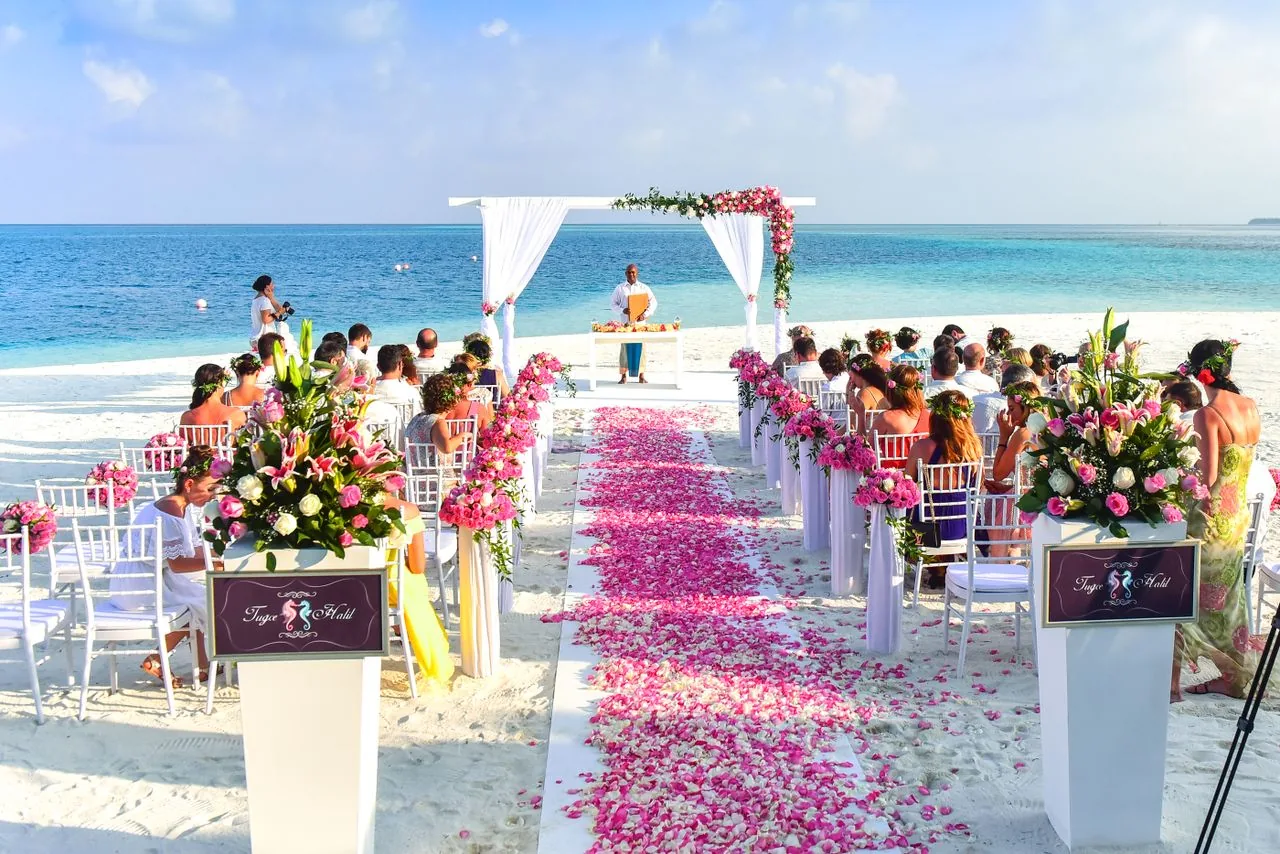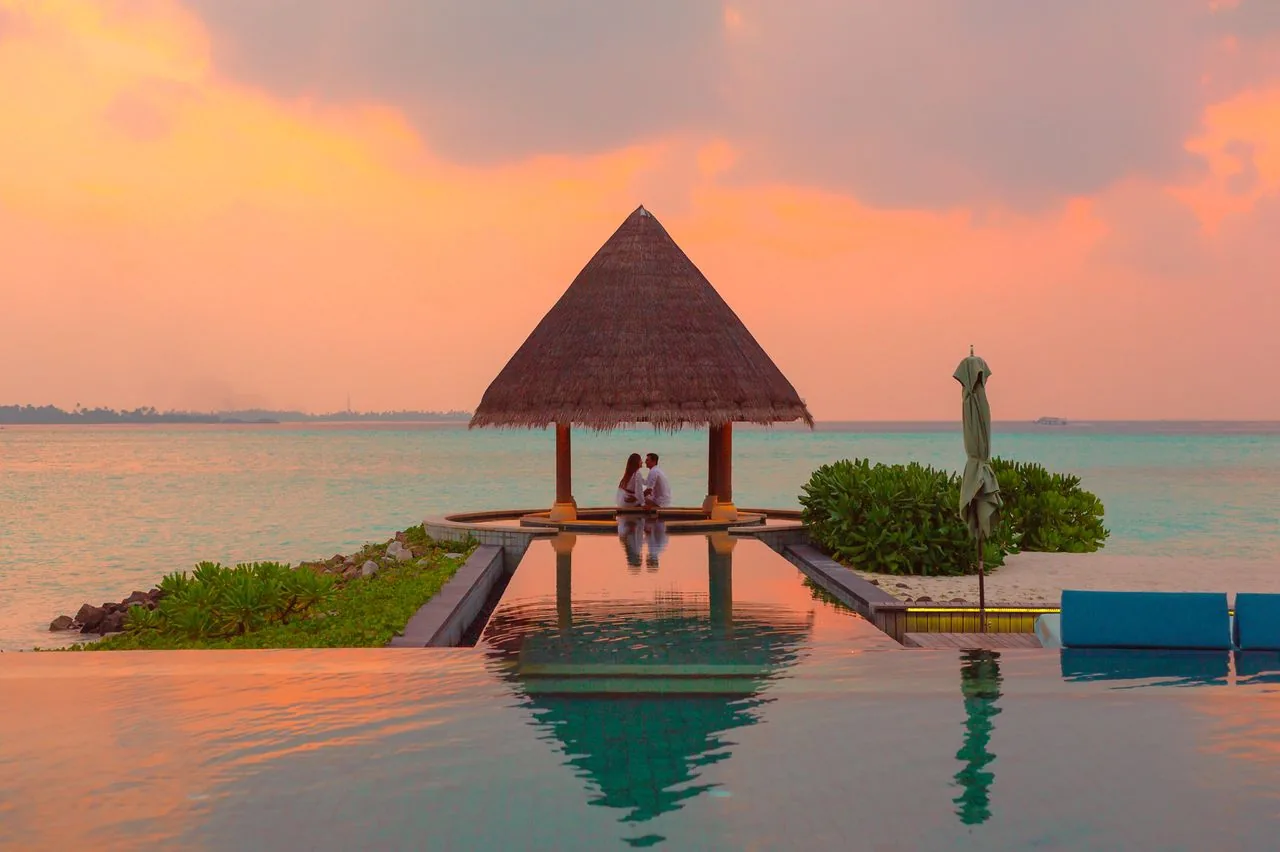
Money is the least romantic subject in wedding planning and the one that quietly decides everything else. A destination celebration makes the maths both harder and, oddly, kinder: harder because you're budgeting in two currencies and across borders, kinder because the setting does so much of the heavy lifting that you can spend less on the things people forget and more on the things they don't. The trick isn't to spend nothing. It's to know precisely where the magic actually lives.
Start with the number, not the dream
Before you've looked at a single villa, write down the total figure you can spend without flinching — and then subtract ten per cent for the things you haven't thought of yet, because there are always things you haven't thought of yet. Currency swings alone can move a foreign quote by five or six per cent between booking and balance, so build that in rather than discovering it in a panic the week before. A great deal of the early reading I send couples toward, including the practical breakdowns in this guide to planning a wedding overseas, makes the same point: the couples who stay calm are the ones who fixed their ceiling first and shopped underneath it, rather than the ones who fell in love and reverse-engineered a budget to fit.
Once the ceiling exists, every later decision becomes a simple question — does this earn its place under the number? — instead of an open-ended temptation.
Where the money really goes
For a wedding of fifty abroad, expect roughly half your spend to disappear into two lines: the venue-and-catering package and the travel-and-stay for you and your nearest. Those are the load-bearing walls; touch them only deliberately. The next quarter goes on the people who make the day run — a planner who speaks the local language is not a luxury at a destination wedding, she's insurance — and on photography, the only thing you carry home. The final quarter is where couples overspend wildly: florals, favours, signage, a second band. This is the trimmable quarter, and trimming it well is the whole game.
A useful test: in five years, will anyone remember this? Guests remember the welcome dinner, the light, the food and how the day felt. They do not remember monogrammed napkins.
The savings that don't show
The kindest economies are invisible. Marry on a Thursday or Friday and many venues abroad drop their rate by a fifth simply because the weekend is their premium. Choose a shoulder-season month — May or late September around the Mediterranean — and you'll pay low-season prices for weather that behaves like summer. Lean on what's local: in-season figs, regional wine and a nearby florist will always cost less and look more honest than imported stems flown in to impress. None of these trims is felt by a single guest, which is exactly why they're the first ones I reach for.
Protect the three non-negotiables
Decide early on three things you will not cut, and then guard them fiercely against the slow creep of "while we're at it." For most couples those three are the photographer, the food and a genuine moment of calm together on the day — a private fifteen minutes with a glass of something cold before the noise begins. Spend freely on those. Be ruthless everywhere else. A destination wedding budgeted this way doesn't feel cheap and it doesn't feel frantic; it feels like a celebration that knew its own mind, somewhere worth the journey, with nothing important left out.