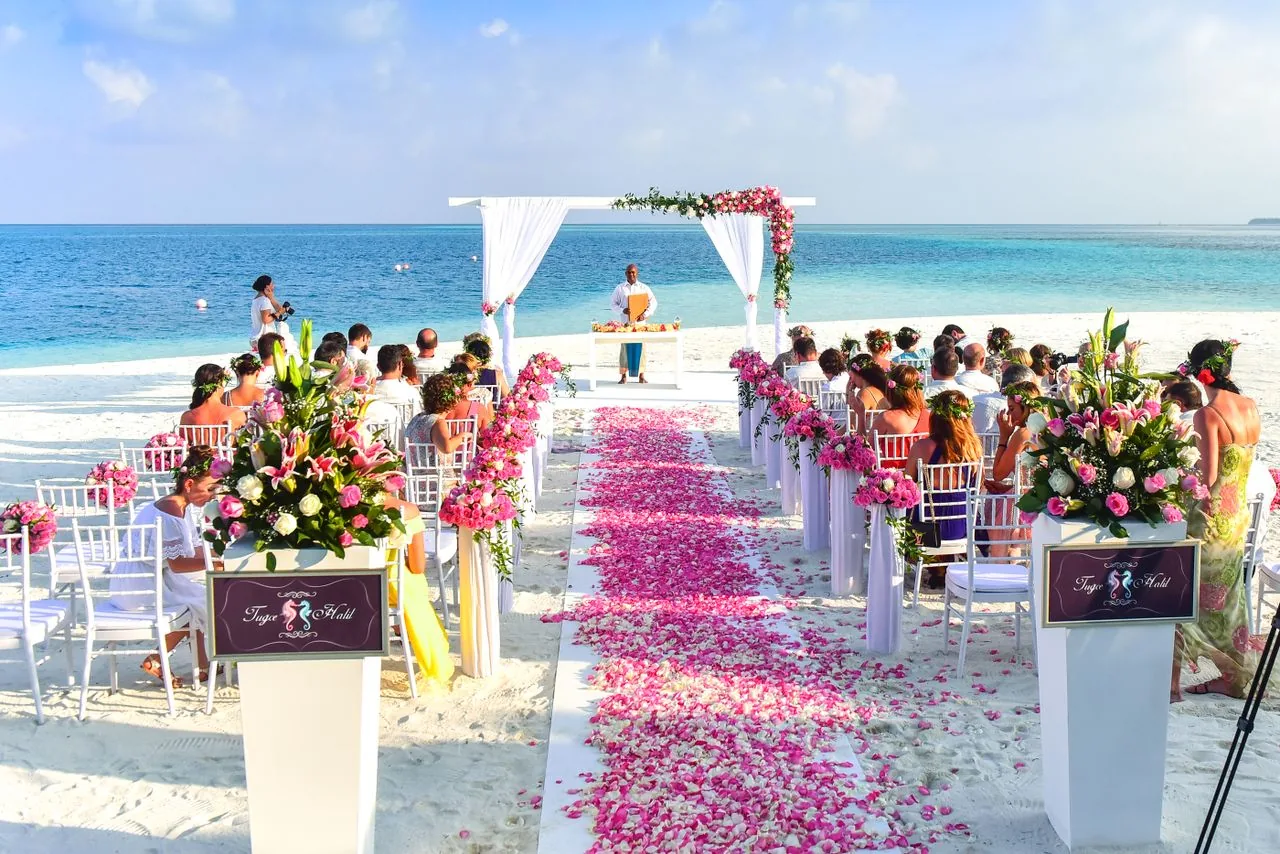
Every guest list is really a sentence about who you are. A destination guest list is the same sentence, written more honestly — because asking someone to take three days off work, book a flight and find a hotel is a question with a real cost attached, and people answer those questions truthfully. That's the gift of celebrating abroad. The room you end up with is made entirely of people who decided, with money and time on the table, that they would not miss it. Building that list well is less about exclusion than about clarity.
The travel test
At home, the list inflates by gravity: a colleague here, a cousin's new partner there, the neighbour who'd be hurt to be left out. Distance deflates it again, and that's healthy. The question that does all the work is simple — would I genuinely want this person standing beside me on the far side of an airport? Not "do I like them," not "would they be offended," but would their face in the crowd actually matter to me at the altar. Run every name through that test and the list shrinks to something true. I've seen couples cut a hundred-and-twenty draft list to fifty-five this way, and not one of them regretted a single name they let go.
A useful rule of thumb: if you haven't spoken to someone in two years, a flight is not the way to rekindle it.
Saying it early, saying it kindly
The single most generous thing you can do for a destination guest list is announce it early — eight months out, not four. People need runway to save, to book leave, to arrange childcare. A save-the-date that names the country and the rough cost of getting there isn't crass; it's a kindness, because it lets people decline quietly and in good time rather than agonising. Be explicit about what you're hosting and what you aren't. "We'd so love you there; we know the trip's a commitment" gives a guest permission to say no without it becoming a wound. The couples who handle this gracefully are the ones who never make a yes feel obligatory.
Tiers without cruelty
Most destination weddings work in two gentle circles. The inner circle — perhaps thirty people — are the ones you'd fly to see regardless: family, the friends who are basically family, the witnesses to your actual life. The outer circle are the people you love but wouldn't ask to cross a continent, and the elegant solution for them isn't a snub, it's a second celebration. A relaxed party back home a few weeks later lets you embrace everyone the destination day couldn't hold, and it takes all the guilt out of the cutting. Nobody's left out; they're simply invited to a different, easier evening.
Plus-ones deserve the same honesty. Established partners, always. Brand-new ones, at your discretion — a fortnight-old romance does not need a passport stamp at your expense.
When the no's arrive
Some of the people you most want will not come, and it will sting. A parent's health, a tight year, a child too small to fly — the reasons are real and rarely about you. The grace is in receiving a decline as warmly as you'd receive a yes, because a destination wedding asks a lot, and the people who can't meet the ask still love you exactly as much. The list you finish with won't be everyone you love. It'll be everyone who could come, gathered somewhere extraordinary, entirely glad to be there. That's not a compromise. That's the whole point of going.